



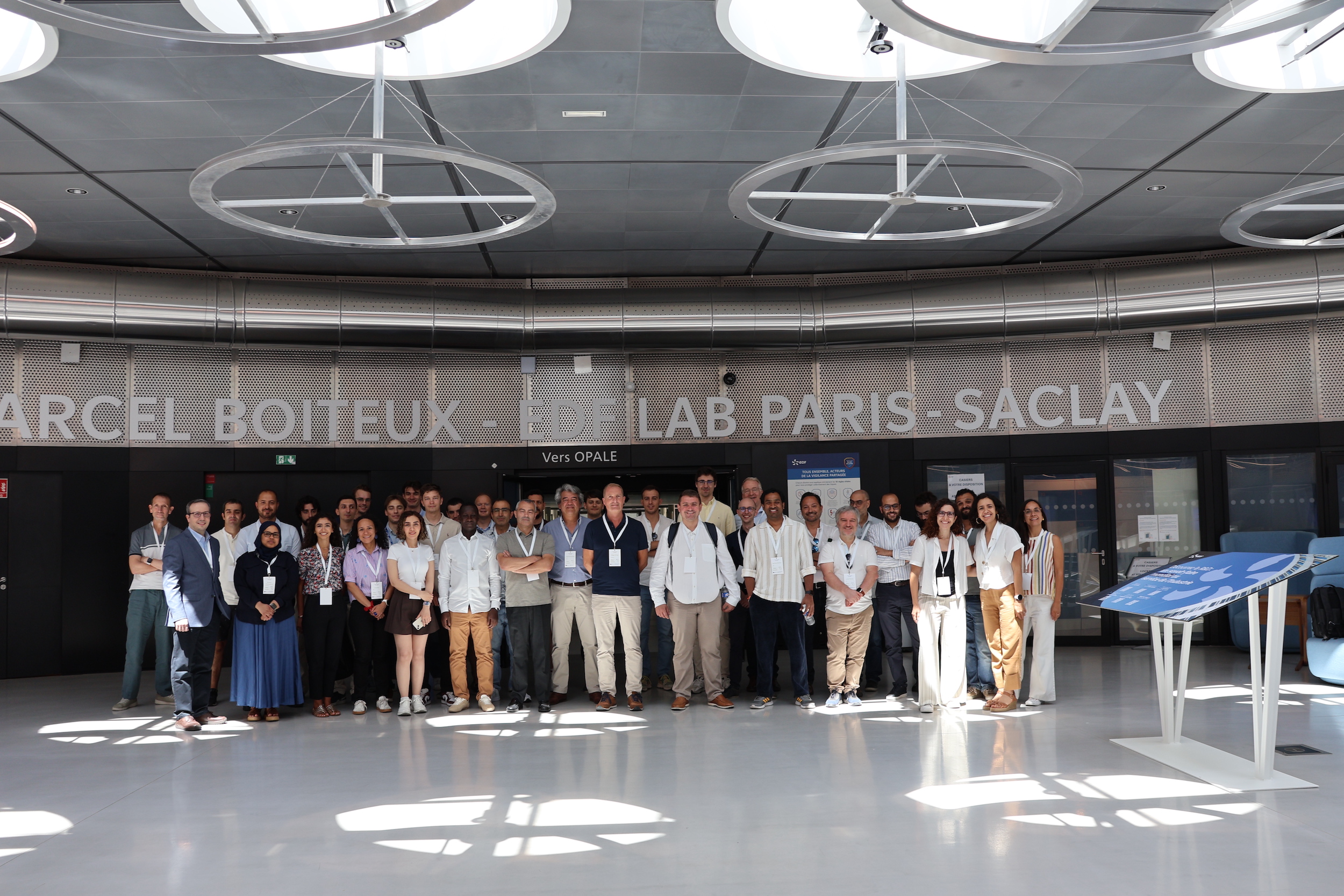
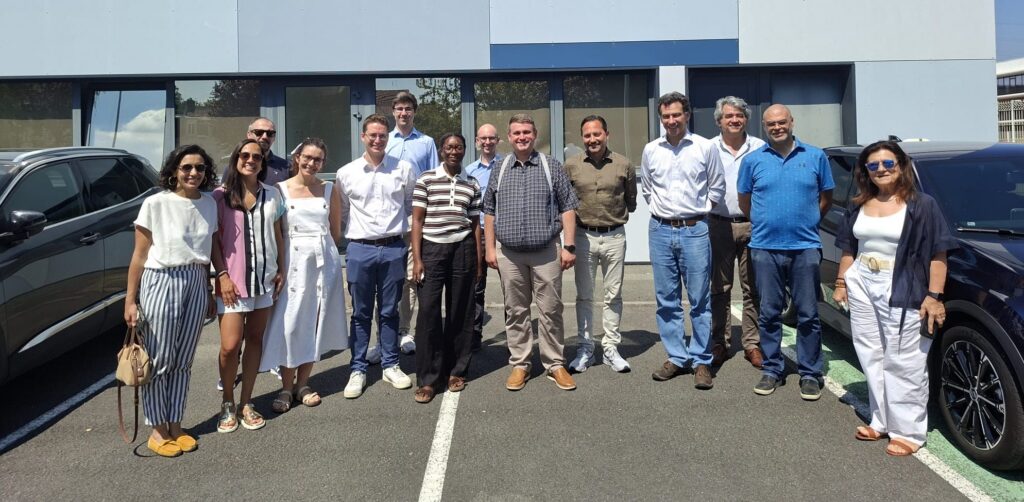
On July 9th and 10th, the Shift2DC consortium gathered at the EDF R&D headquarters in Saclay, France, for the project’s biannual General Assembly (GA) Meeting.
The two-day event provided a collaborative platform for partners to reflect on the progress achieved over the last 32 months and to align strategies for the final phase, leading up to the project’s conclusion in May 2027.
From Project Review to General Assembly
The General Assembly kicked off immediately following the project’s second official Project Review Meeting, which took place just a day prior at CEGELEC Nord Grands Projets – the future physical site of Shift2DC’s Building Demonstrator.
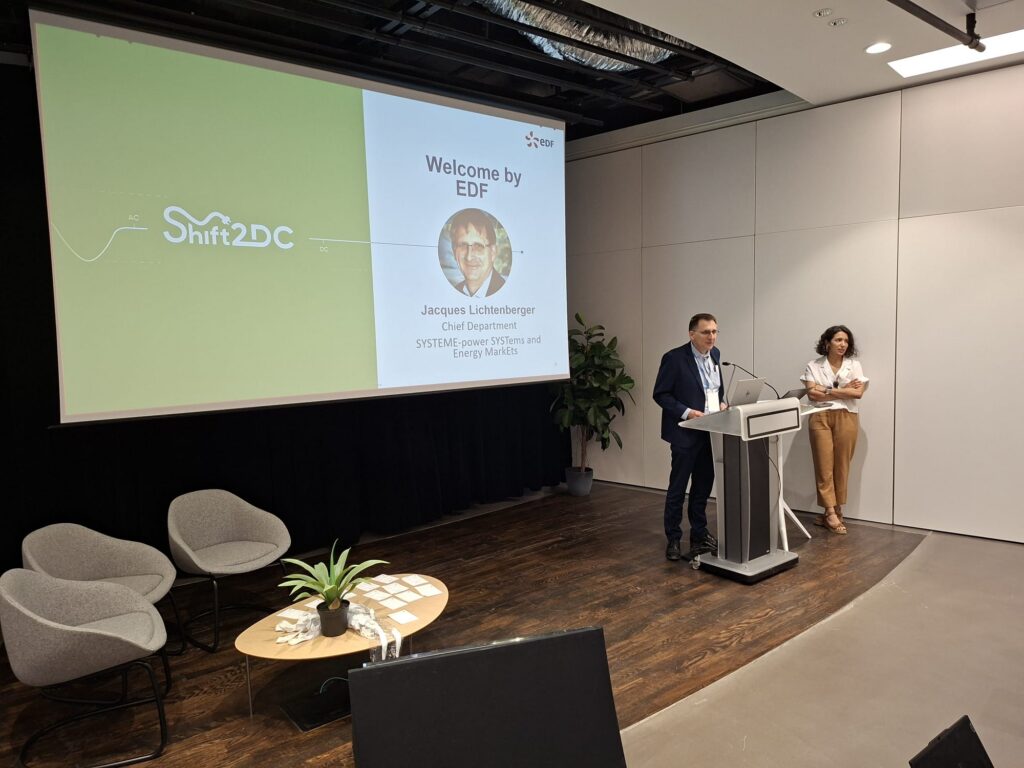
The GA opening session at the EDF facility started with welcoming remarks from Jacques Lichtenberger, Head of of the SYSTÈME Department (Power Systems and Energy Markets) at EDF R&D.
Following the welcome, Project Coordinator Hugo Morais (INESC-ID) delivered a speech on the work completed during the past semester and summarized the outcomes of the previous day’s project review. More importantly, he delivered a strategic message to all attending partners, emphasizing that as Shift2DC enters its final and crucial stage, the consortium must further strengthen its collaboration to ensure successful system integration and demos implementation and comissioning.
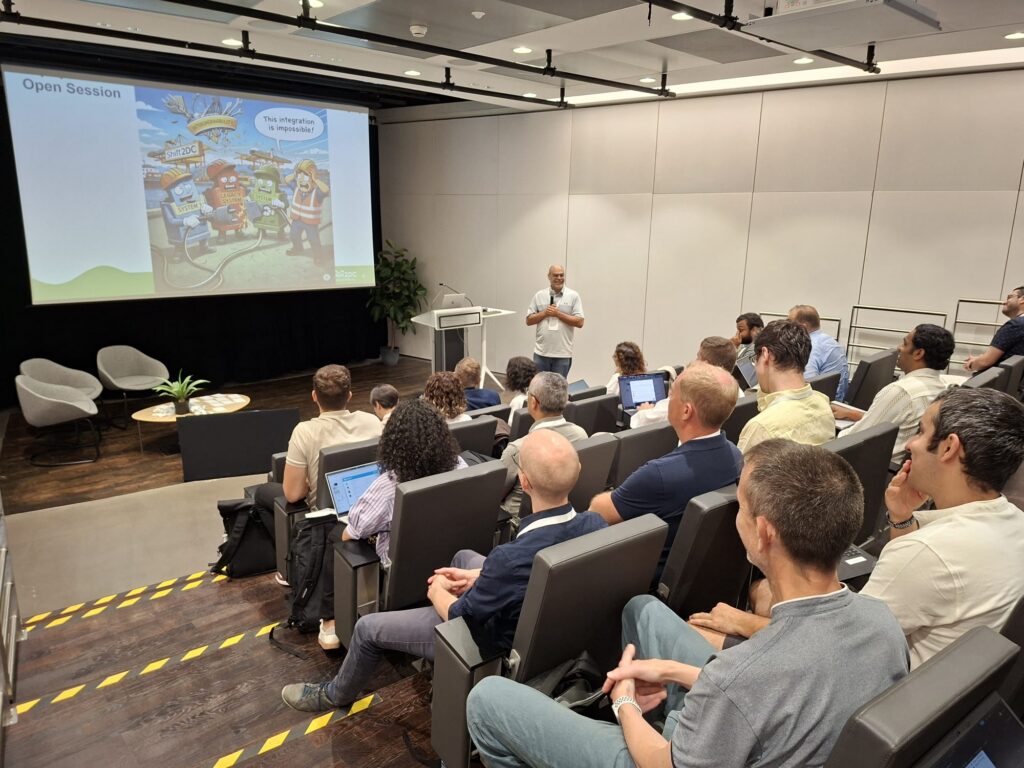
The morning session featured a series of work package updates, beginning on “WP2 – Integration”, led by INESC ID. This was followed by RWTH on “WP3 – Assets, Devices and Appliances” progress. Concluding this segment Taltech provided insights into “WP4 – Demonstration and Field-tests”, wrapping up the technical updates.
As the project enters this final phase, the primary spotlight of the General Assembly shifted toward the current status of the project’s four Demonstrators:
- Buildings (France): Led by EDF and hosted at CEGELEC, this demo is settling the way for low-voltage DC integration in commercial infrastructures.
- Data Centres (Germany): Pioneering efficient, localized DC power distribution architectures.
- Industry (Germany): Showcasing how industrial automation lines and grids can operate seamlessly on DC.
- Ports (Portugal): Utilizing an innovative Digital Twin approach to modernize maritime and port energy ecosystems.
These real-world test sites are designed to prove the technical feasibility, safety, and efficiency of medium-voltage (MV) and low-voltage (LV) DC solutions over traditional alternating current (AC) systems.
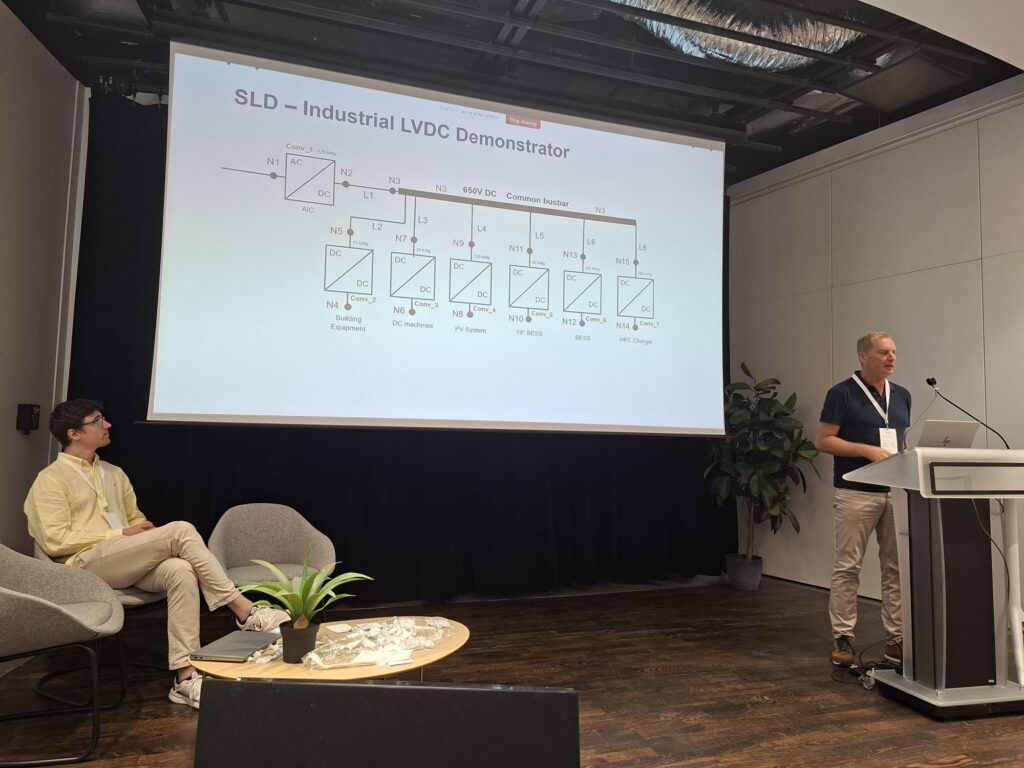
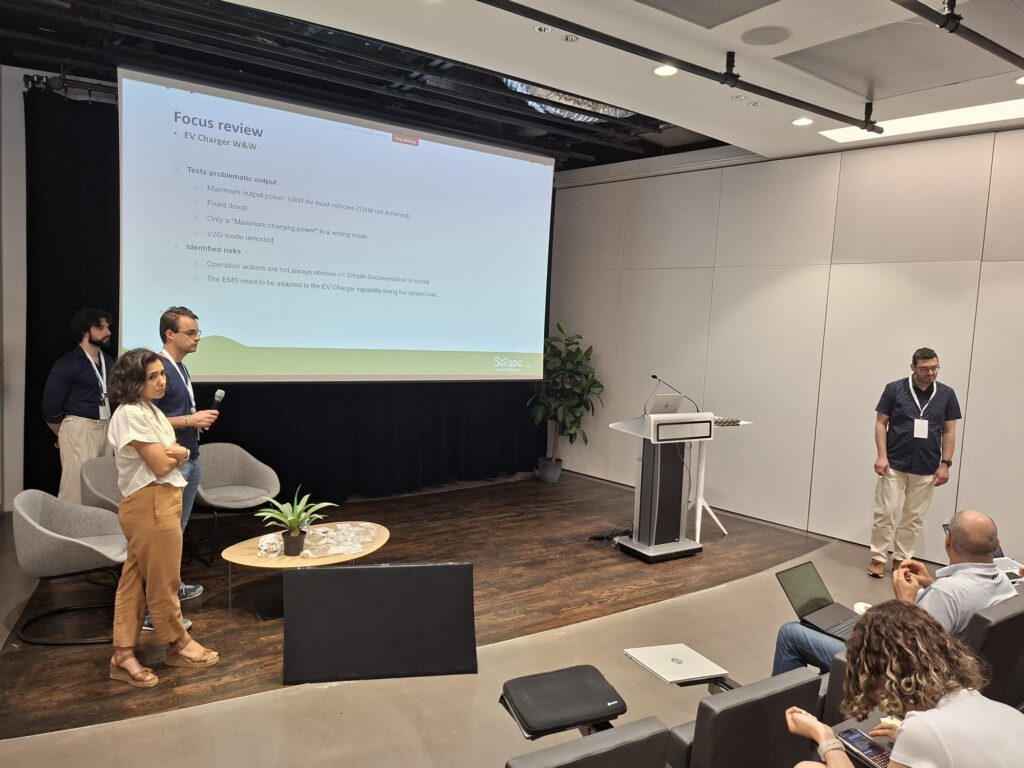
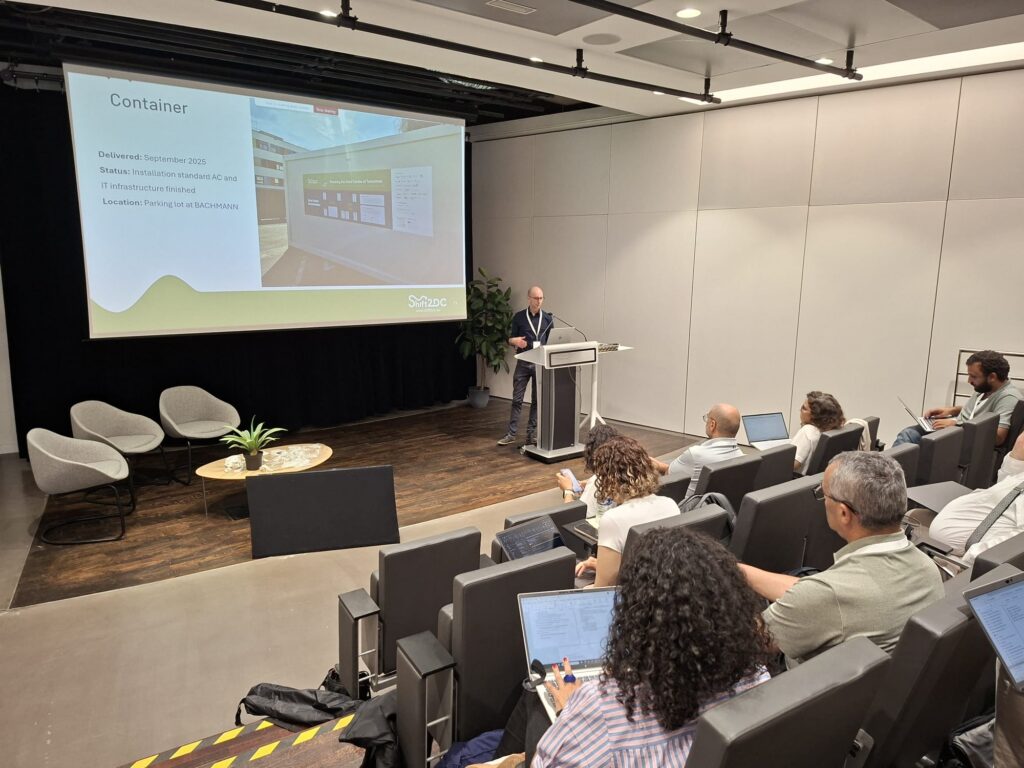
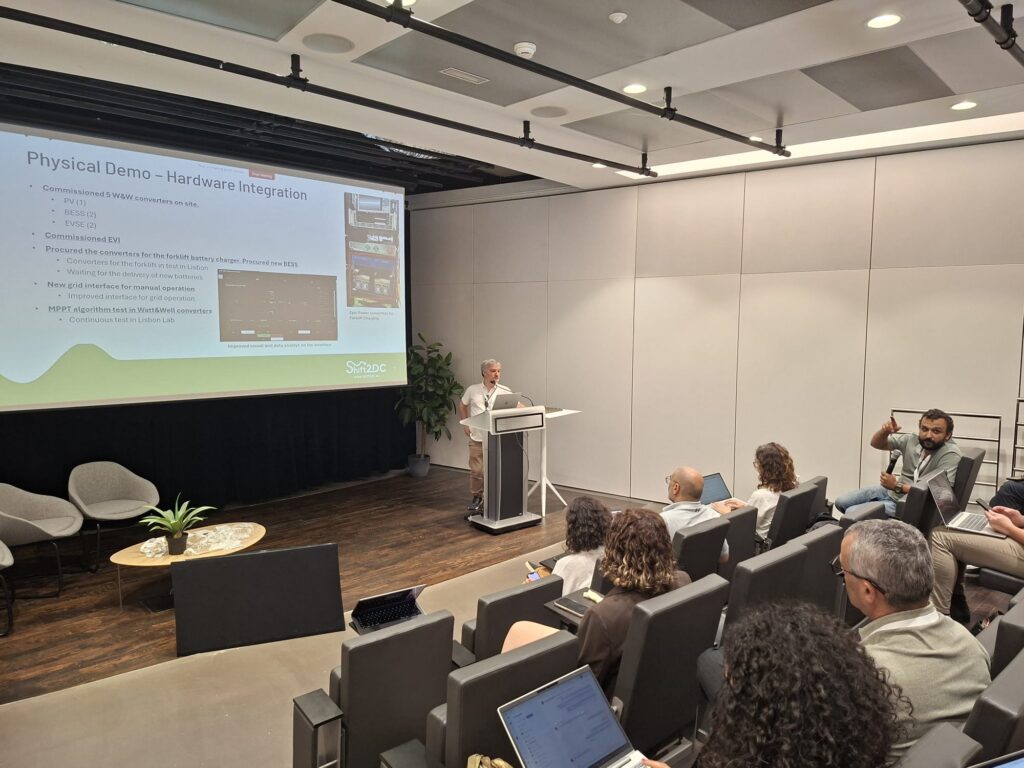
In the afternoon of Day 1, partners transitioned into a collaborative Innovation & Exploitation Workshop. With several cutting-edge solutions being developed under the project, the primary goal was to explore and advance the project’s Exploitation Plan (led by EDF) and the Innovation Plan (led by EDP). Backed strongly by the institutions developing the solutions, the team mapped out concrete plans to maximize the potential market impact of each Key Exploitable Result (KER) and the work that needs to be implemented in the upcoming months.
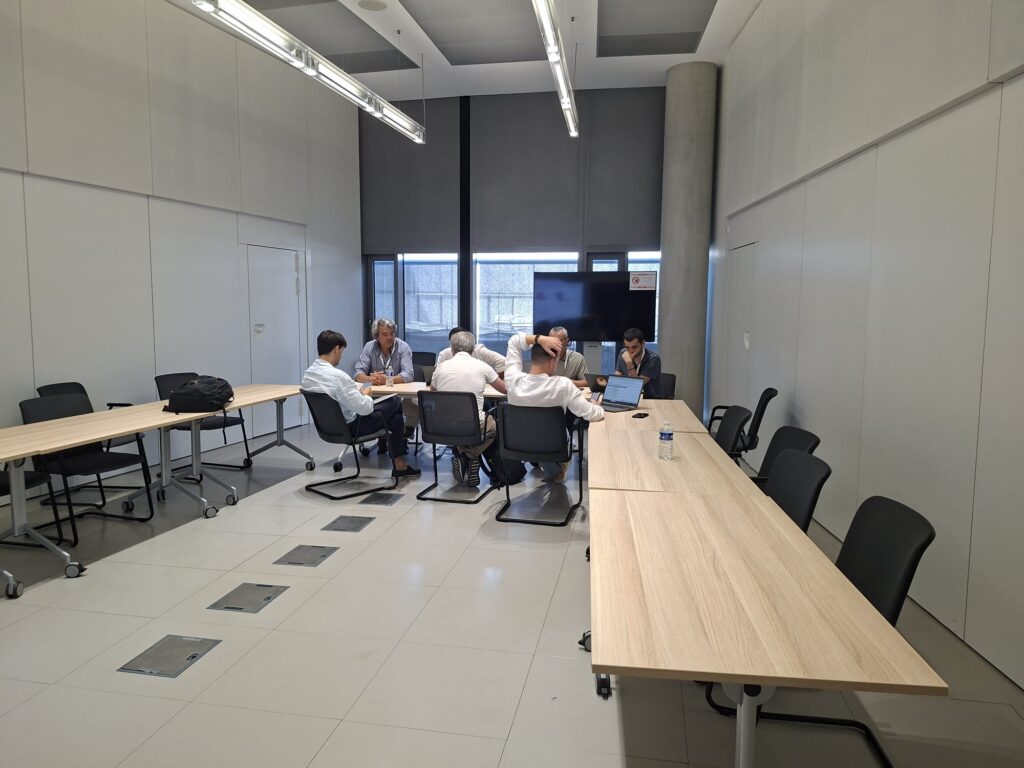
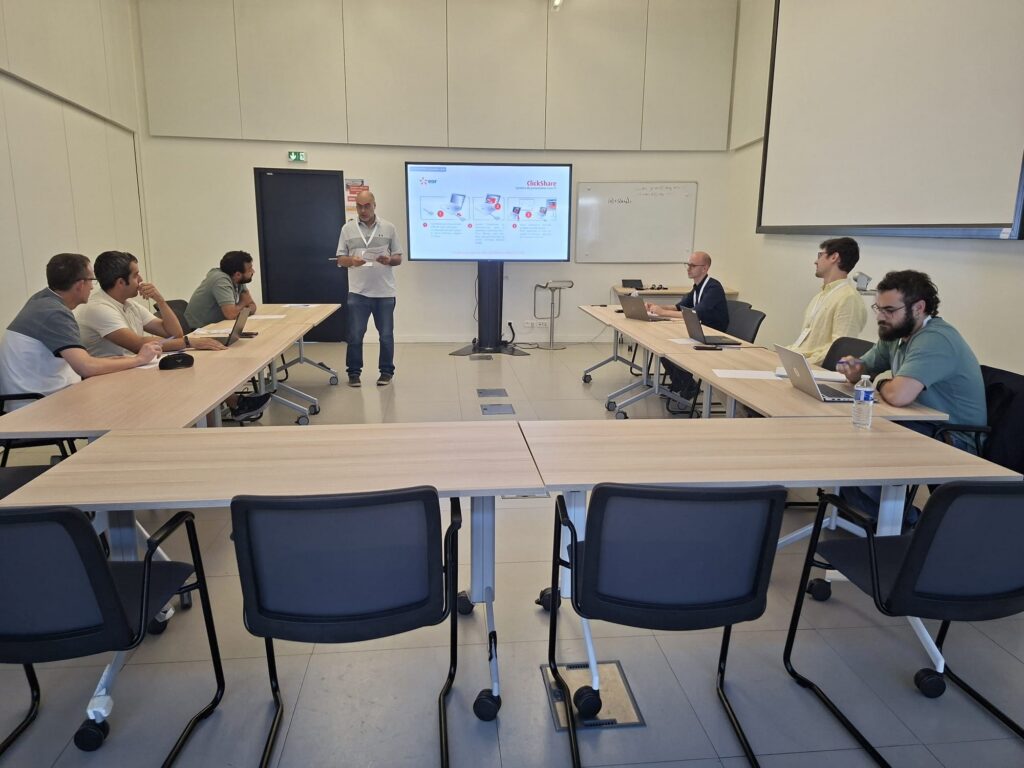
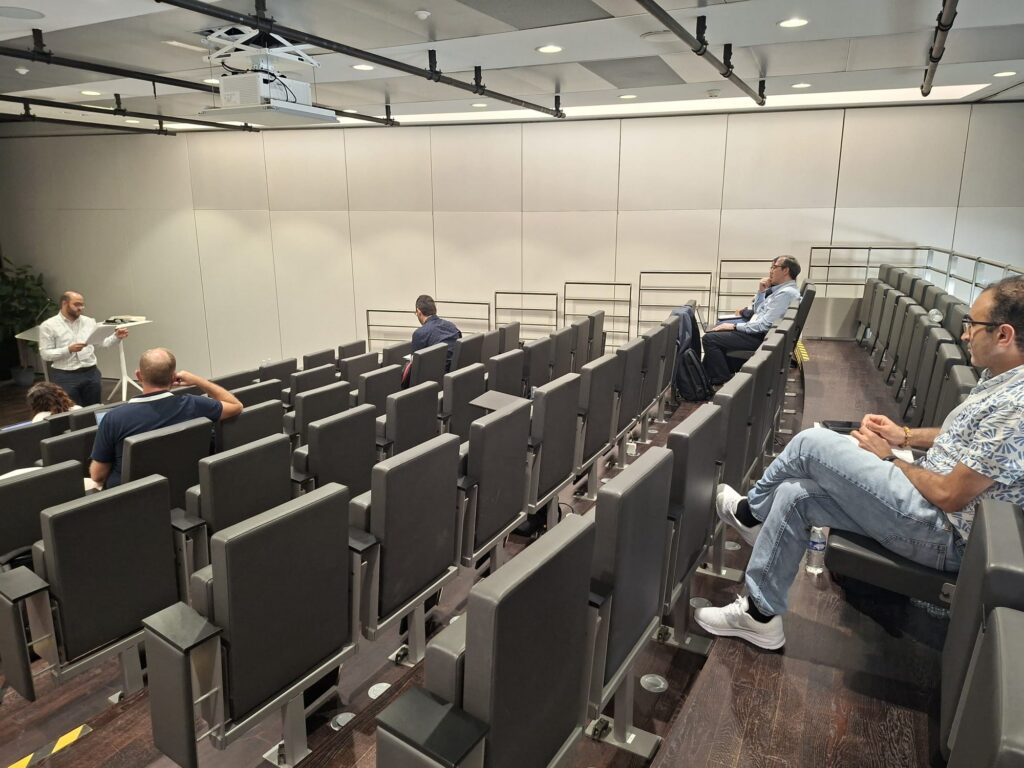
Day 2 kicked off with a strong focus on knowledge-sharing and socioeconomic validation, starting with a guest presentation from Shift2DC’s sister project, DC-POWER. Represented by Slavi Warkentin, the presentation introduced their vision based on a local medium-voltage direct current distribution bus architecture – the D3Bus.
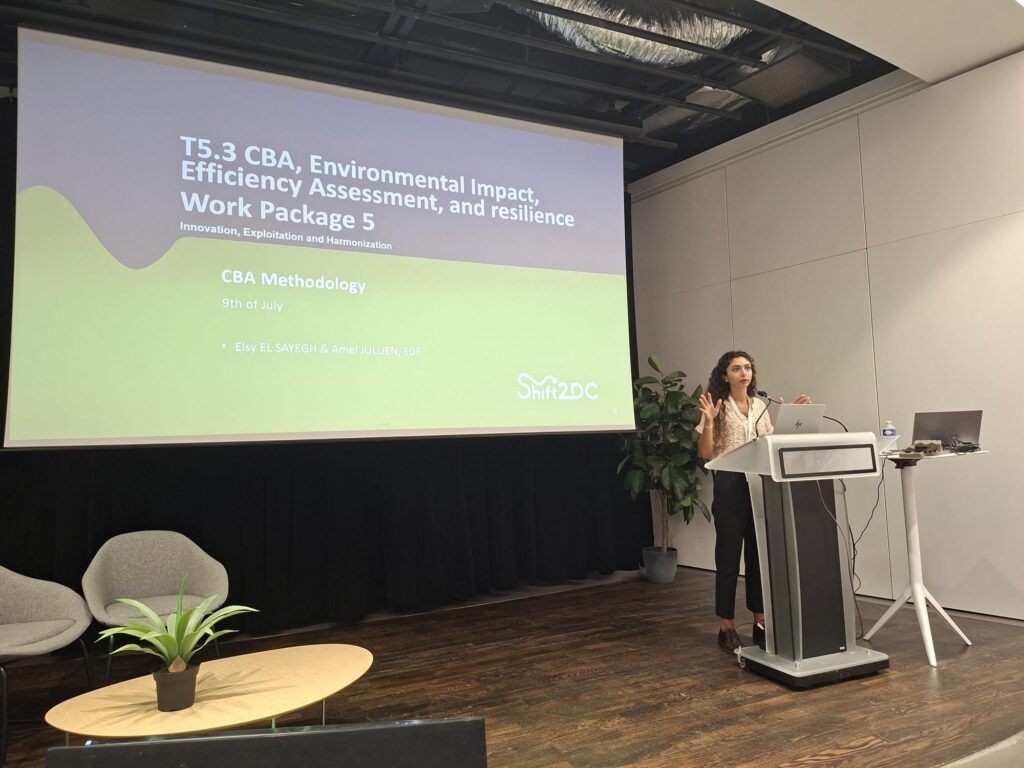
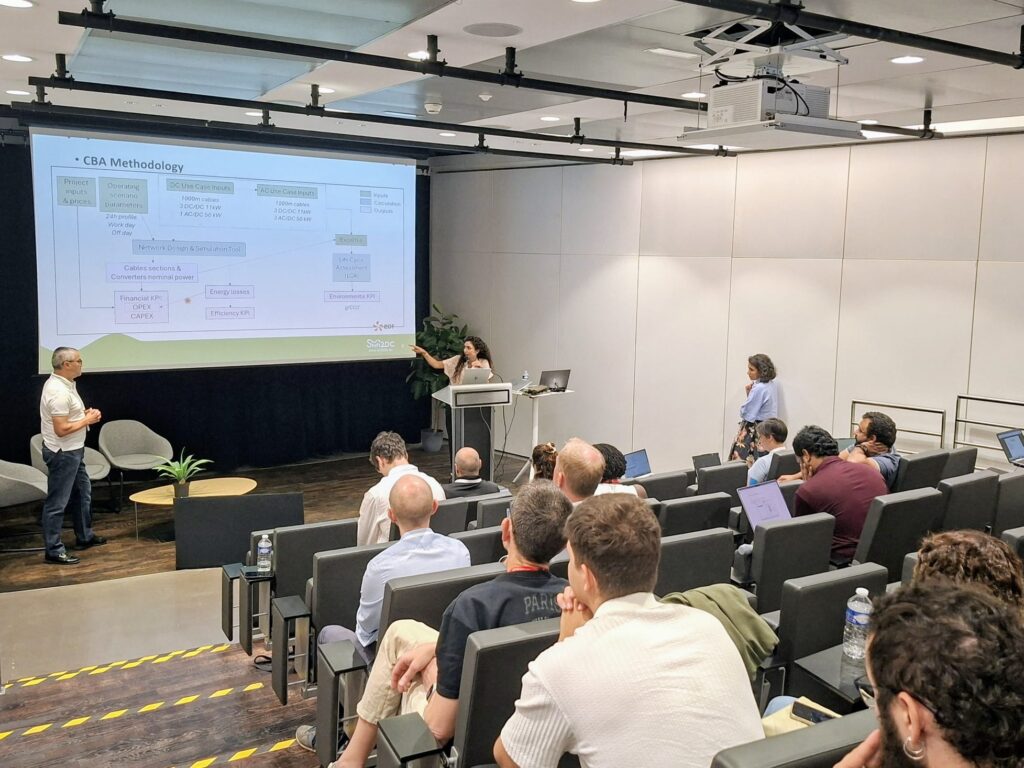
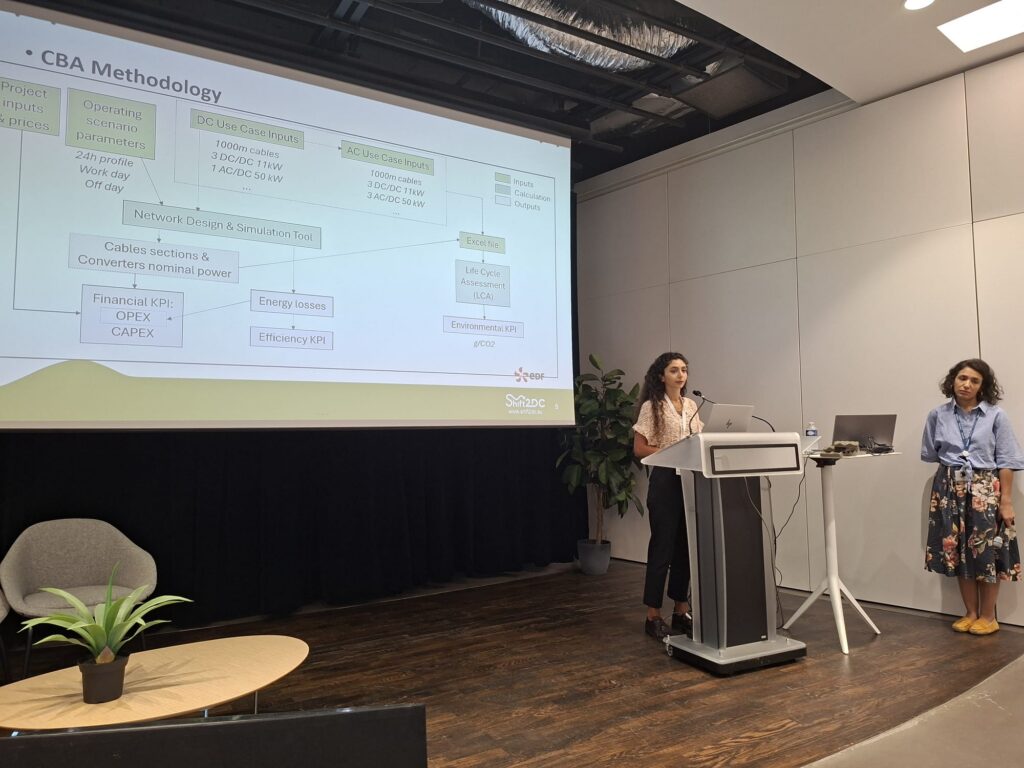
Following this cross-project presentation, partners participated in a specialized Cost-Benefit Analysis Workshop led by EDF. This session focused on evaluating the costs and benefits of newly developed DC components directly against the operating expenses of traditional alternating current (AC) grids, ensuring the project’s outcomes remain economically viable and competitive.
The final stop of the two-day meeting was a guided tour of the high-tech EDF Living Lab. This facility serves as a privileged testing environment where researchers and industrial partners can validate advanced electrical systems under real-world conditions, acting as a bridge between theoretical software development and physical hardware implementation.
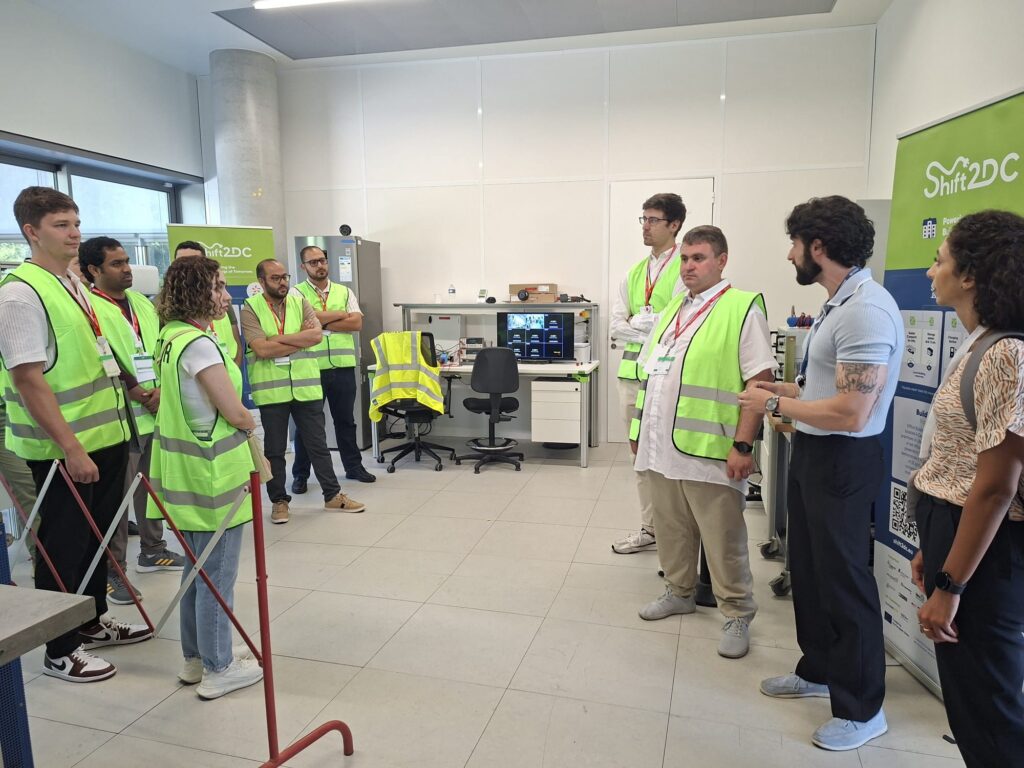
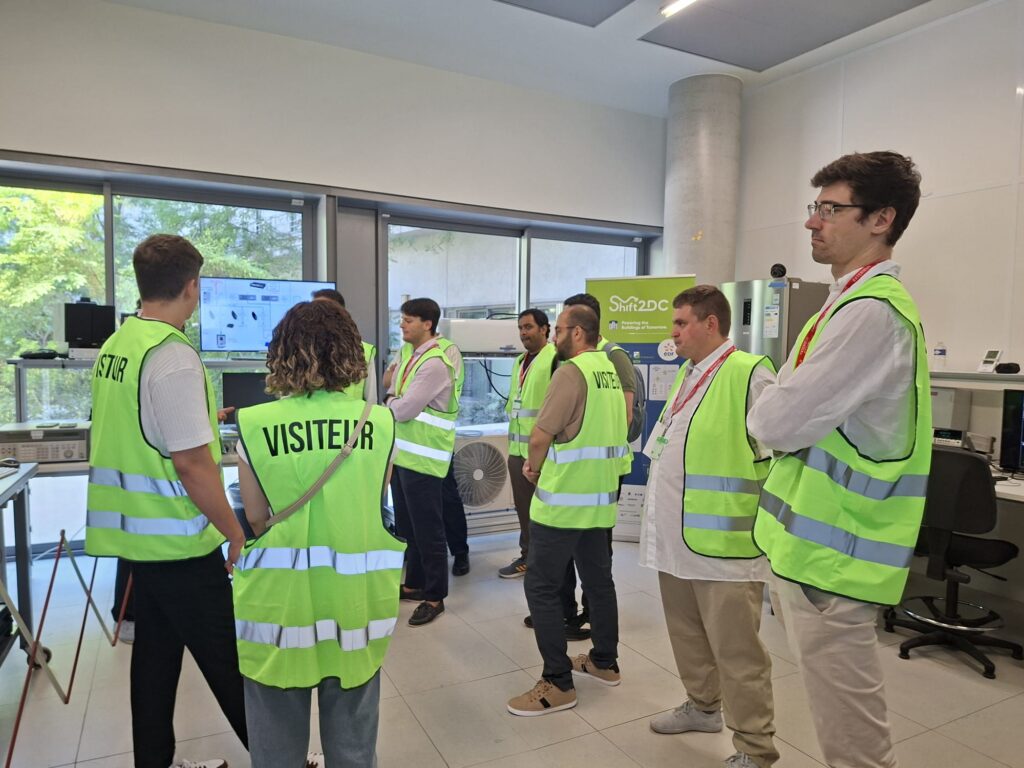
Overall, the Shift2DC project relies on four primary Living Labs to test and validate newly developed Medium Voltage (MV) and Low Voltage (LV) DC equipment:
- EDF Living Lab (Saclay, France): Bridges the gap between software theory and physical hardware validation.
- RWTH Aachen University-PGS Living Lab: Focuses on higher-voltage infrastructure and system-level integration, utilizing 5kV medium-voltage and low-voltage systems.
- TECNALIA Research & Innovation Living Lab: Complements the RWTH lab by focusing specifically on testing component-level control algorithms and new LV devices.
- INESC-ID Energy Dream LAB (Lisbon, Portugal): Established to support the Port Demonstrator and its Digital Twin by running a complete, high-fidelity replication of the port’s physical ecosystem.
The significant progress shared in France is backed by a powerful consortium that combines the expertise of 28 top European partners. A special note of appreciation goes out to EDF and Project Leader Amel Addala Jullien for hosting such an excellent and productive event.
As Shift2DC moves forward into the deployment and validation of its hardware prototypes and software platforms, the alignment achieved in France has successfully set the course for the critical months ahead.
Next stop? In six months we will be hoisted in Germany by our partner Bachmann!
Comments are closed.